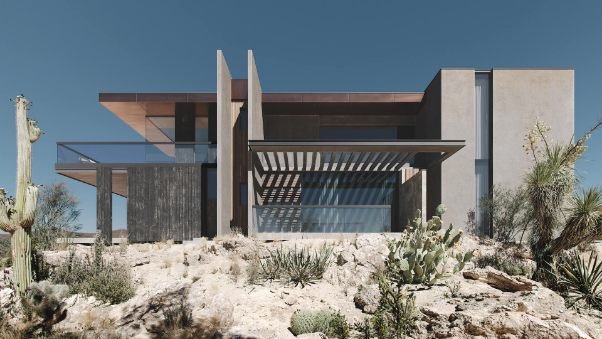
There was a time when a floor plan, a brochure, and a bit of imagination were enough to sell an unbuilt project. That time has quietly passed. Buyers, investors, and councils across Australia now expect to see a project clearly before committing to it, and a developer who cannot deliver that clarity is competing with one hand tied behind their back.
3D architectural visualisation and exterior rendering have moved from a nice extra to something closer to table stakes and understanding why says a lot about where the property market is headed.
What Changed to Make This Non-Negotiable?
It is not one single shift: it is a handful of them arriving at once:
- Buyers have grown far more visually literate, comparing every project against the polished imagery they scroll past daily on social media
- Competition between developments has intensified, meaning a project with flat, dated visuals simply looks weaker next to one with a genuinely convincing render
- Digital marketing now front-loads the buying journey, meaning a buyer often forms their first impression of a project online, long before any human conversation happens
Put together, these shifts mean the visuals are not supporting the pitch anymore. Increasingly, they are the pitch.
Why Doesn’t a “Good Enough” Render Cut It Anymore?
There is a meaningful difference between a render that technically shows a building and one that sells it, and buyers can feel that difference even if they could not articulate it. A render that is slightly off, in lighting, proportion, or context, quietly undermines trust in the whole project, even when the architecture itself is genuinely strong.
A few things separate visualisation that merely exists from visualisation that earns its keep:
- Architectural accuracy, matching the real drawings rather than a loose artistic interpretation
- Site accurate lighting and context, reflecting how a building will genuinely look in its real location, not a generic backdrop
- Consistency across formats, so a hero render, a walkthrough, and a floor plan all feel like one coherent project
- Delivery that respects deadlines, since a stunning render that arrives after the campaign launches has already lost its value
Is This Really About Aesthetics, or Something Bigger?
It is tempting to file rendering under “marketing polish,” but that undersells what is happening. Strong visualisation directly affects several things developers care about far beyond appearance:
- Approval timelines, since a council assessing a planning application is making a judgement based on what it can see
- Investor confidence, where capital decisions often hinge on how clearly a project has been communicated
- Sales velocity, since a buyer deciding on a six-figure deposit needs genuine clarity, not just a nice picture
Weak visuals do not just look less impressive. They introduce genuine friction into decisions that would otherwise move faster.
What Happens to Developers Who Treat This as Optional?
The honest answer: they increasingly get left behind.
As more developers invest properly in visualisation, the market’s baseline expectation rises with them, and a project that skips this step does not just look slightly behind, it looks noticeably behind next to genuine competitors in the same market.
What was once a point of differentiation has become a bare minimum, and the gap between “adequate” and “non-negotiable” continues to close every year.
Where Ecompapi Studio Fits into That Shift
Ecompapi Studio has built its reputation across the Australian property market by treating visualisation as core infrastructure for a project’s success, not a design afterthought.
Precise architectural modelling, genuinely local context, and a consistent visual system across every asset, that combination is exactly what turns visualisation from decoration into a genuine competitive advantage.
Conclusion
Visualisation stopped being optional the moment buyer expectations caught up with what is possible. For Australian developers serious about approvals, investment, and sales, treating 3D visualisation and exterior rendering as non-negotiable is not excessive caution anymore. It is simply what competing seriously in this market now requires.
The developers who recognise this shift early tend to benefit twice over, faster approvals and stronger sales in the short term, and a growing reputation for polish and professionalism that carries into every project that follows. In a market this competitive, that compounding advantage is difficult to overstate.
At Ecompapi Studio, we help Australian developers meet that standard with visualisation built to genuinely move a project forward.