The Indian stock market has always been a dynamic space where sectoral stories unfold
over years, shaping the wealth of millions of investors. Among the names that continue to
generate buzz in brokerage circles and retail investor communities alike, Hindustan
Aeronautics Limited stands out as a defining story of India's defence ambitions. At the same
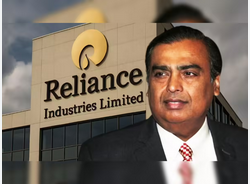
time, Reliance Industries, a conglomerate that touches virtually every Indian's daily life,
keeps asserting its dominance across energy, retail, and digital platforms. When traders and
analysts open their terminals each morning, HAL share price and Reliance share price are
among the first they check — not out of habit, but because these two stocks often act as
barometers of broader economic sentiment. Together, they represent the twin pillars of
India's growth story: state-backed industrial capacity and private sector innovation at scale.
1. HAL's Strategic Position in India's Defence Ecosystem
Hindustan Aeronautics Limited is not always just a company – the cornerstone of India's
sovereignty process is miles away. For decades, H.A.L. Under initiatives like Atmanirbhar
Bharat, the authorities’ continued focus on indigenous development has helped HAL.
Defence capital allocations have improved dramatically in successive Union Budgets, with a
large portion of that spending flowing at once towards HAL order books.
The order ebook is what gets long-term investors excited. HAL currently has one of the
largest order books in its entire history, covering a wide range of soft fighters, advanced light
helicopters and trainers. The execution of those schemes runs over several years as its
sales visibility is particularly high compared to most other listed Indian companies In any
other case, investors seeking predictable earnings growth in a volatile market find this high
quality particularly attractive.
2. Reliance Industries: A Company That Defies Simple
Categorisation
Across the globe, very few companies have reinvented themselves as dramatically as
Reliance Industries has done in the last decade. Once often referred to as a petrochemical
refinery, Reliance is today a similarly aged company, retail giant and media powerhouse.
The launch of Jio fundamentally disrupted India’s telecom sector, bringing hundreds of
thousands of Indians online and creating a massive captive environment.
The retail arm, Reliance Retail, has become one of the largest consumer companies in India,
operating hundreds of stores across codecs from food to electronics, with each of those
segments supporting a diversified revenue stream that protects the entire company from
downturns in the sector. As crude oil costs fall, refineries may also be pressured, but Jio's
subscriber cultivation or Retail's overall performance for the festive season may
compensate. This internal hedging mechanism is one reason why institutional buyers
continue to hold huge positions in Reliance.
3. Valuation Dynamics and Market Sentiment
The valuation talk around the two professions is not true at all. HAL usually trades in the top
tier to its pristine average due to two elements: lack of cosy patrons on Indian stock
exchanges, and the inherent dedication of officials to keep HAL well-funded. When
geopolitical tensions push upwards or defence financing announcements are made, the HAL
catalogue responds almost without fail before order confirmations arrive. This forward-
looking pricing is a reminder that market tariffs are based on expectations, not just current
earnings.
Given its sheer size, Reliance tends to be viewed differently by individual investor groups.
Value buyers examine its refining petrochemical phase through a traditional accumulation
lens. Growth buyers focus on options inherent in Jio's virtual offering expansion and
unlocking value through potential IPOs of its subsidiaries. Reliance's market capitalisation
sits easily the highest of any business in India, which in itself speaks volumes about how
deeply embedded the is in Approximate nationally economy.
4. Risks Every Investor Should Acknowledge
No inventory analysis is complete without an honest assessment of the risks. The number
one concern for HAL has historically been execution delays. Aerospace manufacturing is
particularly complex, and any slippage in shipping timelines could push the revenue
reputation into the coming quarters, damaging near-term revenue In addition to the fact that
HAL's fate is tied to the defence spending of the authorities, which remain challenged by
policy changes and pressure priorities.
Dependencies present certain challenges. Even assuming that it is practical in terms of
foreign exchange flows, the huge debt burden is still a factor under scrutiny. The telecom
market is intensely aggressive, and sustaining the ARPU boom for Jio requires continued
investment in community improvements. Retail growth, at its best form, operates in a sector
where customer preferences shift rapidly, and competition between organised and
unorganised players is fierce. Investors must weigh those elements carefully before deciding
to size their positions.
5. The Long-Term Case for Both Stocks in an Indian
Portfolio
India's growth trajectory over the coming decade creates a compelling backdrop for both
these companies. Rising defence budgets, a growing middle class, and an expanding digital
economy are secular trends that are not going to reverse in the short term. HAL benefits
directly from the first, while Reliance benefits from the second and third.
For the patient, long-term investor who understands that wealth creation in equities is a
function of time in the market rather than timing the market, both HAL and Reliance occupy
logical positions in a diversified Indian portfolio. They are not identical in their risk-return
profiles, but together they offer complementary exposure to two of India's most powerful
economic forces. Staying informed, reviewing fundamentals periodically, and resisting the
temptation to react to every price movement remains the wisest counsel for anyone holding
these names.