Planning an adventure to Island Peak in 2026? One of the most important things climbers must understand before booking their expedition is the updated Nepal Mountaineering Association (NMA) climbing royalty fees. These fees directly affect the total cost of your Island Peak expedition and can influence your travel budget, climbing season, and permit arrangements.
Island Peak, also known as Imja Tse, is one of Nepal’s most popular trekking peaks. Standing at 6,189 meters in the Everest region, it attracts climbers from around the world who want a technical Himalayan climbing experience without attempting an 8,000-meter mountain. However, beginning in late 2025 and continuing into 2026, the NMA revised its permit structure, leading to higher royalty fees for foreign climbers.
What Are NMA Climbing Royalty Fees?
NMA climbing royalty fees are mandatory permit charges issued by the Nepal Mountaineering Association for climbing designated trekking peaks in Nepal. These fees help support mountain conservation, route maintenance, rescue coordination, and tourism management.
Island Peak falls under the NMA-managed trekking peaks category, meaning every climber must obtain an official climbing permit before attempting the summit. The royalty fee is separate from other trekking permits such as the Sagarmatha National Park entry permit and the Khumbu local municipality fee.
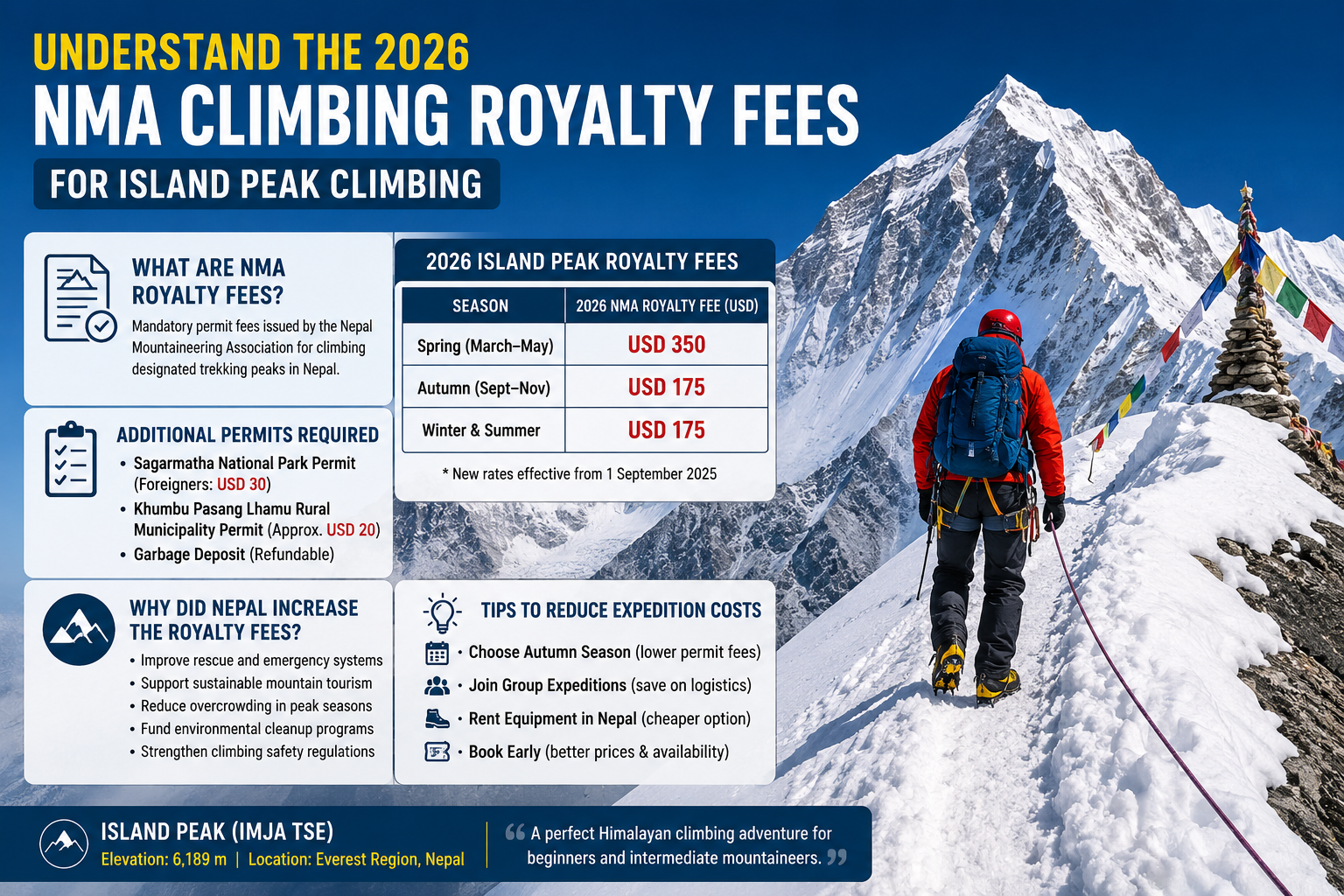
2026 Island Peak Royalty Fees
The revised NMA fee structure became effective from September 1, 2025, and remains active throughout 2026. Under the new system, permit fees vary according to the climbing season.
Here is the updated Island Peak permit cost for foreign climbers:
| Season | 2026 NMA Royalty Fee |
|---|---|
| Spring (March–May) | USD 350 |
| Autumn (September–November) | USD 175 |
| Winter & Summer | USD 175 |
These updated fees represent a significant increase compared to the previous pricing system, where spring permits cost USD 250.
Why Did Nepal Increase the Royalty Fees?
Nepal introduced higher climbing royalty fees to improve mountain safety, manage increasing tourist traffic, and support environmental conservation in the Himalayas.
The Everest region has seen a steady rise in trekking and climbing activity over the past decade. By increasing permit fees, Nepal aims to:
- Improve rescue and emergency systems
- Support sustainable mountain tourism
- Reduce overcrowding during peak seasons
- Fund environmental cleanup programs
- Strengthen climbing regulations
According to recent mountaineering reports, the government also introduced stricter climbing safety standards, including mandatory licensed guides for several trekking peaks.
Additional Permits Required for Island Peak Climbing
The NMA royalty fee is only one part of the total permit expense. Climbers also need additional permits to enter the Everest region.
Sagarmatha National Park Permit
All trekkers and climbers entering the Everest region must purchase the Sagarmatha National Park entry permit.
- Foreigners: USD 30
- SAARC nationals: Lower discounted rates apply
Khumbu Pasang Lhamu Rural Municipality Permit
This local permit is collected near Lukla and supports regional tourism infrastructure.
- Approximate fee: USD 20
Garbage Deposit
Expedition operators may also include a refundable garbage deposit under NMA regulations to encourage responsible waste management in the mountains.
How the New Fees Affect Total Island Peak Climbing Costs
The updated royalty fees slightly increase the overall cost of climbing Island Peak in 2026. However, permits are only one portion of the complete expedition budget.
Typical Island Peak climbing packages in 2026 range between:
- Budget expeditions: USD 1,500–2,200
- Standard guided climbs: USD 2,500–3,500
- Luxury expeditions: USD 4,000–6,500
These packages generally include guides, accommodation, meals, domestic flights, climbing equipment support, and logistics.
Why Spring Permits Cost More
Spring is the most popular climbing season in Nepal because of its stable weather, clearer skies, and safer summit conditions. During March, April, and May, climbers enjoy:
- Better visibility
- Lower avalanche risk
- More predictable temperatures
- Longer daylight hours
Due to higher demand and improved summit success rates, the NMA charges the highest royalty fees during spring. Autumn remains slightly cheaper while still offering excellent climbing conditions.
Tips to Reduce Island Peak Permit Expenses
Although permit fees are fixed, climbers can still lower overall expedition costs through smart planning.
Choose the Autumn Season
Autumn permits cost half the spring rate, making it one of the best times for budget-conscious climbers.
Join Group Expeditions
Many trekking agencies offer discounts for group climbs because logistics, guides, and equipment costs are shared.
Rent Equipment in Nepal
Instead of buying expensive mountaineering gear internationally, climbers can rent essential equipment in Kathmandu or Chhukung.
Book Early
Flights to Lukla and climbing permits are easier to secure when booked several months in advance. Early bookings can also reduce package prices.
Is Island Peak Still Worth Climbing in 2026?
Despite the increased NMA royalty fees, Island Peak remains one of the best value climbing adventures in the Himalayas. It provides an excellent introduction to high-altitude mountaineering while offering breathtaking views of Everest, Lhotse, Ama Dablam, and the surrounding Khumbu region.
Many climbers use Island Peak as preparation for more advanced Himalayan expeditions because it combines trekking, glacier travel, fixed rope climbing, and technical summit skills in one adventure.
Final Thoughts
Understanding the 2026 NMA climbing royalty fees for Island Peak is essential for planning a successful Himalayan expedition. While the updated permit structure increases costs slightly, the additional fees support safer and more sustainable mountaineering in Nepal.
Before booking your trip, climbers should carefully review all permit expenses, seasonal price differences, guide requirements, and total expedition costs. With proper preparation, Island Peak continues to offer one of the most rewarding climbing experiences in Nepal for both beginner and intermediate mountaineers.
For the latest updates on Nepal climbing regulations, always consult official trekking agencies and updated NMA announcements before your expedition.