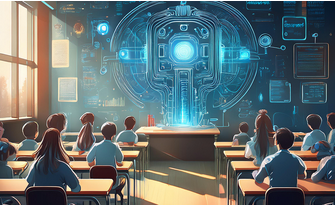
Artificial Intelligence (AI) is rapidly transforming modern classrooms, changing how students learn and how teachers teach. What once seemed like futuristic technology is now a practical tool used in schools worldwide. From personalized lessons to automated grading systems, AI is helping create smarter, more engaging, and inclusive learning environments.
This article explores how classrooms are embracing artificial intelligence, its benefits, challenges, and what the future holds for education.
Introduction to AI in Education
Artificial Intelligence in education refers to the use of smart systems and algorithms that can analyze data, adapt to student needs, and assist in teaching processes. These tools are designed not to replace teachers but to support them and enhance the learning experience.
Today’s classrooms are no longer limited to textbooks and blackboards. Instead, they are becoming dynamic spaces where digital tools help students learn at their own pace, making education more flexible and personalized.
How AI Is Being Used in Classrooms
1. Personalized Learning
One of the most significant contributions of AI is personalized learning. AI systems can analyze a student’s strengths, weaknesses, and learning pace to create customized lesson plans.
For example, if a student struggles with math concepts, AI tools can provide additional exercises and explanations tailored specifically to that student. This ensures that no learner is left behind.
2. Intelligent Tutoring Systems
AI-powered tutoring systems act as virtual assistants for students. These systems provide instant feedback, answer questions, and guide students through difficult topics.
Unlike traditional learning, students no longer need to wait for teacher feedback—they can get help anytime, even outside the classroom.
3. Automated Grading and Assessment
Grading assignments can be time-consuming for teachers. AI simplifies this process by automatically evaluating quizzes, tests, and even essays.
This allows teachers to focus more on teaching and interacting with students rather than spending hours on administrative tasks.
4. Smart Content Creation
AI tools can generate educational content such as quizzes, summaries, and study materials. Teachers can use these tools to design engaging lessons quickly and efficiently.
Additionally, AI can recommend learning resources based on student performance, making study materials more relevant and effective.
5. Predictive Analytics
AI can analyze student data to identify patterns and predict which students may need extra help.
For instance, if a student’s performance starts declining, AI systems can alert teachers early so they can intervene before the problem worsens.
Benefits of AI in Classrooms
1. Improved Learning Outcomes
AI helps students learn at their own pace, leading to better understanding and improved academic performance.
2. Increased Efficiency for Teachers
By automating tasks like grading and lesson planning, AI saves time and reduces teacher workload.
3. Enhanced Student Engagement
Interactive AI tools make learning more fun and engaging through gamification and real-time feedback.
4. Accessibility and Inclusion
AI supports students with disabilities through features like speech-to-text, text-to-speech, and language translation.
5. Future-Ready Skills
Students gain exposure to advanced technologies, preparing them for future careers in a digital world.
Challenges of AI in Education
Despite its advantages, AI also presents several challenges:
1. Over-Reliance on Technology
Students may become too dependent on AI, reducing critical thinking and problem-solving skills.
2. Data Privacy Concerns
AI systems often collect student data, raising concerns about privacy and security.
3. Bias in Algorithms
AI systems may produce biased results if they are trained on incomplete or unfair data.
4. Lack of Human Interaction
Excessive use of AI can reduce personal interaction between teachers and students, which is essential for emotional and social development.
Role of Teachers in an AI-Driven Classroom
Even with advanced technology, teachers remain the heart of education. AI cannot replace human qualities such as empathy, creativity, and emotional intelligence.
Instead, teachers act as facilitators who guide students, interpret AI-generated insights, and ensure ethical use of technology. Their role is evolving, not disappearing.
Real-World Impact of AI in Classrooms
Across the world, schools are already integrating AI into daily learning. In countries like India, AI tools are helping students learn subjects like mathematics and languages more effectively through adaptive learning apps.
Some advanced schools even use AI to design entire learning systems where students follow personalized schedules and focus on both academics and life skills.
The Future of AI in Education
The future of AI in classrooms looks promising. As technology continues to evolve, we can expect:
- More advanced personalized learning systems
- AI-powered virtual classrooms
- Greater integration of augmented and virtual reality
- Improved teacher support tools
- Stronger focus on ethical AI use
However, successful implementation will require proper training, policies, and a balanced approach to ensure that AI enhances education rather than replaces its human element.
Conclusion
Artificial Intelligence is reshaping classrooms in powerful ways, making education more personalized, efficient, and engaging. From intelligent tutoring systems to automated grading, AI is helping both students and teachers achieve better outcomes.
However, it is essential to use AI responsibly, addressing challenges such as data privacy, bias, and over-reliance. The goal is not to replace teachers but to empower them and create a more effective learning environment.
As classrooms continue to embrace AI, the future of education will be a blend of technology and human connection—working together to unlock every student’s potential.