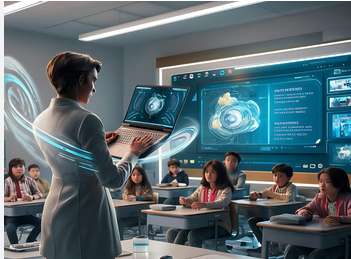
Artificial Intelligence (AI) is transforming almost every industry, and education is no exception. One of the most impactful applications of AI in education is personalized learning—a method that tailors educational experiences to meet the unique needs, abilities, and learning styles of individual students. As technology continues to evolve, AI-driven personalized learning is shaping the future of student education, making learning more efficient, engaging, and accessible.
What is Personalized Learning?
Personalized learning is an educational approach that adapts teaching methods, content, and pace according to each student’s individual needs. Traditional education systems often follow a “one-size-fits-all” model, where all students learn the same material at the same pace. However, this approach does not account for differences in learning styles, abilities, and interests.
AI changes this by analyzing student data—such as performance, behavior, and preferences—and using it to create customized learning paths. These systems can recommend the most suitable study materials, adjust difficulty levels, and provide real-time feedback, ensuring that each student learns effectively.
Role of Artificial Intelligence in Personalized Learning
AI plays a crucial role in enabling personalized learning through various technologies and tools:
1. Adaptive Learning Systems
AI-powered adaptive learning platforms adjust educational content in real time based on a student’s performance. If a student struggles with a topic, the system provides additional resources and practice. If they excel, it introduces more advanced material.
2. Intelligent Tutoring Systems
AI-driven tutors act like virtual teachers, offering guidance, answering questions, and providing feedback. These systems allow students to learn at their own pace and receive support anytime.
3. Learning Analytics
AI collects and analyzes large amounts of data to identify patterns in student learning. Teachers can use these insights to understand student strengths and weaknesses and make informed decisions.
4. Automated Content Creation
AI can generate quizzes, summaries, and study materials tailored to individual learners. This reduces the workload for teachers and ensures that students receive relevant content.
Benefits of AI in Personalized Learning
The integration of AI into personalized learning offers several advantages:
1. Improved Student Engagement
AI makes learning interactive and engaging by adapting content to student interests and abilities. Personalized learning paths keep students motivated and involved.
2. Better Learning Outcomes
Studies show that AI-driven personalized learning improves academic performance by addressing individual learning gaps and providing targeted support.
3. Flexible Learning Experience
Students can learn at their own pace, anytime and anywhere. This flexibility is especially beneficial for online and remote learning environments.
4. Real-Time Feedback
AI systems provide instant feedback, helping students identify mistakes and improve quickly without waiting for teacher evaluation.
5. Scalability
AI enables high-quality education to reach a large number of students simultaneously, making education more accessible worldwide.
Challenges of AI in Education
Despite its benefits, AI in personalized learning also faces several challenges:
1. Data Privacy and Security
AI systems rely on student data, raising concerns about privacy and data protection. Ensuring secure handling of data is crucial.
2. Algorithmic Bias
AI systems may reflect biases present in their data, leading to unfair outcomes. Addressing bias is essential for equitable education.
3. Over-Reliance on Technology
Excessive dependence on AI may reduce critical thinking and problem-solving skills if not used properly.
4. Teacher Role Transformation
AI does not replace teachers but changes their role. Educators must adapt to using AI tools effectively while maintaining human interaction.
Future of AI in Personalized Learning
The future of AI in education looks promising, with several emerging trends:
1. Integration with Virtual and Augmented Reality
AI combined with VR and AR will create immersive learning environments, making education more interactive and engaging.
2. AI-Powered Virtual Assistants
Advanced AI assistants will provide personalized support, answer questions, and guide students through their learning journey.
3. Predictive Analytics
AI will predict student performance and identify potential challenges early, allowing for timely intervention.
4. Lifelong Learning
AI will support continuous education by offering personalized learning opportunities beyond traditional classrooms.
5. Inclusive Education
AI has the potential to make education more inclusive by catering to diverse learning needs and providing equal opportunities for all students.
Impact on Teachers and Students
AI-driven personalized learning is transforming the roles of both teachers and students:
- For students: Learning becomes more customized, engaging, and efficient. Students take control of their education and progress at their own pace.
- For teachers: AI acts as an assistant, helping with administrative tasks, data analysis, and content creation, allowing teachers to focus more on mentoring and guiding students.
Rather than replacing teachers, AI enhances their capabilities and supports them in delivering better education.
Conclusion
Artificial Intelligence is revolutionizing personalized learning by making education more adaptive, efficient, and student-centered. By tailoring learning experiences to individual needs, AI helps improve engagement, learning outcomes, and accessibility. While challenges such as data privacy and ethical concerns remain, the potential benefits far outweigh the risks.
As technology continues to evolve, AI will play an increasingly important role in shaping the future of education. The combination of human expertise and intelligent systems will create a more inclusive, effective, and personalized learning environment for students worldwide.