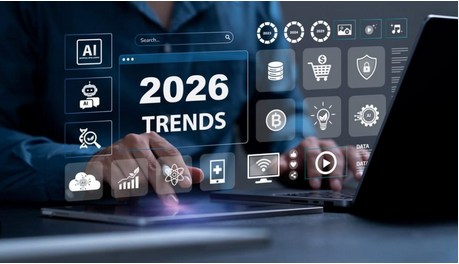
Technology is evolving at a pace faster than ever before. As we move deeper into 2026, innovation is no longer just about convenience—it is about transformation. From artificial intelligence to quantum computing, the digital landscape is being reshaped in ways that impact businesses, education, healthcare, and everyday life.
In this article, we explore the top trending technology advancements that are defining the future and why they matter for individuals and organizations alike.
1. Artificial Intelligence Is Becoming More Human
Artificial Intelligence (AI) has moved beyond simple automation. Today, AI systems can understand context, generate human-like responses, and even make decisions based on complex data patterns.
Modern AI tools are now being used in:
- Customer service chatbots
- Content creation
- Medical diagnosis
- Financial forecasting
What makes AI truly revolutionary in 2026 is its ability to learn continuously. With advancements in machine learning and neural networks, AI systems are becoming more intuitive and adaptive.
Businesses that adopt AI are gaining a competitive edge by improving efficiency and reducing operational costs.
2. Rise of Generative AI and Content Automation
Generative AI is one of the most talked-about trends today. It allows machines to create text, images, videos, and even music.
This technology is transforming industries such as:
- Digital marketing
- Blogging and SEO
- Graphic design
- Video production
For content creators and bloggers, generative AI tools are helping produce high-quality articles faster. However, human creativity still plays a crucial role in ensuring authenticity and emotional connection.
The combination of AI efficiency and human creativity is the key to successful content in today’s digital world.
3. 5G and the Expansion of Connectivity
The global rollout of 5G networks is revolutionizing internet speed and connectivity. With ultra-low latency and high data transfer rates, 5G enables real-time communication and seamless digital experiences.
Key benefits of 5G include:
- Faster mobile internet speeds
- Improved online gaming and streaming
- Enhanced smart city infrastructure
- Growth of IoT (Internet of Things) devices
In rural and developing regions, 5G is helping bridge the digital divide by providing better access to online services and education.
4. Internet of Things (IoT) Is Everywhere
The Internet of Things refers to connected devices that communicate with each other through the internet. From smart homes to industrial automation, IoT is becoming an integral part of daily life.
Examples of IoT applications:
- Smart thermostats and lighting systems
- Wearable fitness trackers
- Connected cars
- Smart agriculture systems
IoT is improving efficiency and providing real-time data insights. In agriculture, for instance, farmers can monitor soil moisture and weather conditions to increase crop productivity.
5. Cybersecurity Is More Important Than Ever
As technology grows, so do cyber threats. Data breaches, hacking, and identity theft are major concerns for individuals and businesses.
In 2026, cybersecurity is no longer optional—it is essential.
Important cybersecurity practices include:
- Using strong passwords
- Implementing multi-factor authentication
- Regular software updates
- Data encryption
Organizations are investing heavily in cybersecurity solutions to protect sensitive data and maintain customer trust.
6. Cloud Computing Continues to Dominate
Cloud computing has become the backbone of modern digital infrastructure. It allows businesses to store data, run applications, and scale operations without investing in expensive hardware.
Popular cloud services include:
- Data storage
- Software as a Service (SaaS)
- Infrastructure as a Service (IaaS)
The flexibility and cost-effectiveness of cloud technology make it a preferred choice for startups and large enterprises alike.
7. Blockchain Beyond Cryptocurrency
Blockchain technology is no longer limited to cryptocurrencies. It is now being used in various industries to improve transparency and security.
Applications of blockchain:
- Supply chain management
- Digital identity verification
- Secure voting systems
- Smart contracts
Blockchain ensures data integrity by storing information in a decentralized and tamper-proof system.
8. Augmented Reality (AR) and Virtual Reality (VR)
AR and VR technologies are creating immersive digital experiences. These technologies are widely used in gaming, education, and training.
Examples include:
- Virtual classrooms
- Real estate virtual tours
- Medical training simulations
- Interactive gaming
As hardware becomes more affordable, AR and VR are expected to become mainstream in the coming years.
9. Green Technology and Sustainability
Sustainability is a major focus in today’s tech industry. Companies are developing eco-friendly solutions to reduce carbon footprints and promote environmental responsibility.
Green technology trends:
- Renewable energy solutions
- Electric vehicles
- Energy-efficient data centers
- Smart waste management systems
Technology is playing a key role in combating climate change and building a sustainable future.
10. The Growth of Quantum Computing
Quantum computing is still in its early stages, but it has the potential to revolutionize computing power. Unlike traditional computers, quantum computers can process complex calculations at an incredible speed.
Potential applications:
- Drug discovery
- Cryptography
- Financial modeling
- Climate research
Although not yet widely accessible, quantum computing is expected to become a game-changer in the next decade.
Conclusion
Technology in 2026 is not just about innovation—it is about transformation. From AI and IoT to blockchain and quantum computing, these advancements are shaping the future in ways we could only imagine a few years ago.
For businesses, staying updated with these trends is essential for growth and competitiveness. For individuals, understanding technology helps in adapting to a rapidly changing digital world.
The future is digital, connected, and intelligent. Embracing these changes will open new opportunities and redefine how we live and work.